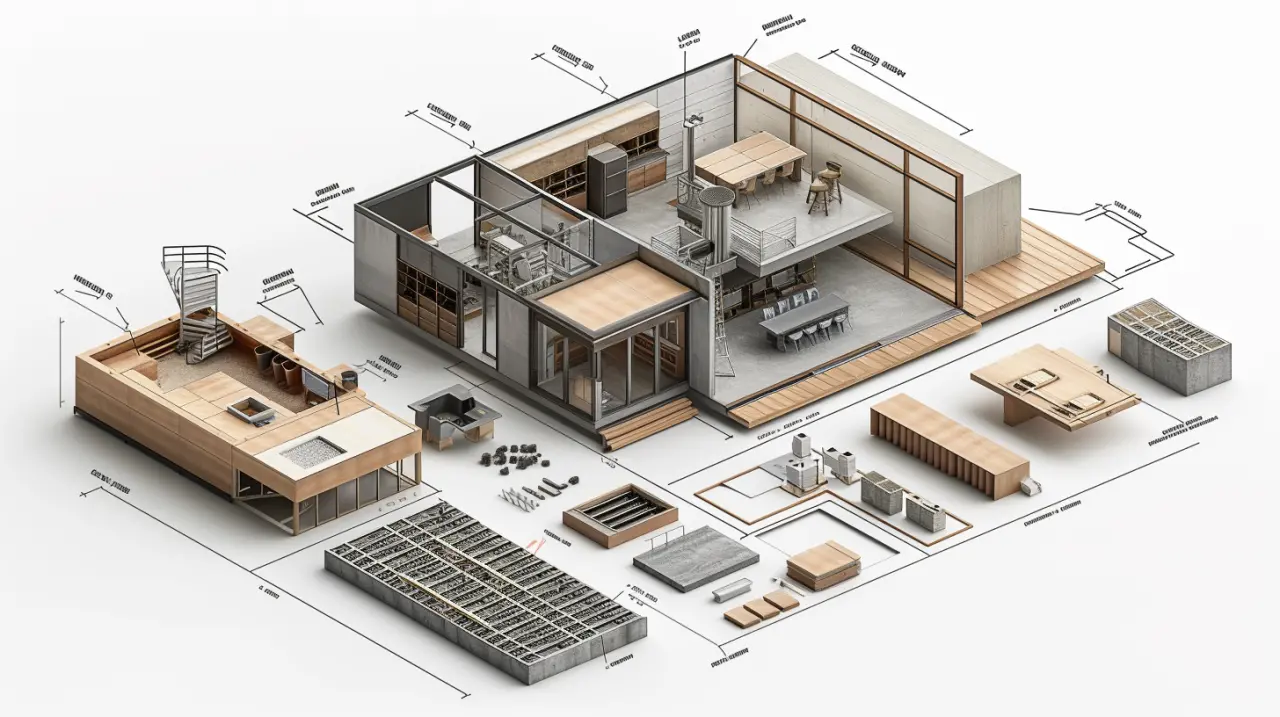
The world of architecture has undergone a remarkable transformation over the last decade. 3D architecture has emerged as a groundbreaking tool for architects, designers, and developers, enabling precise visualization, efficient planning, and enhanced communication. From residential buildings to complex urban designs, 3D architectural modeling and rendering have reshaped how we conceive, design, and construct spaces.
This article delves into the world of 3D architecture, exploring its benefits, applications, tools, and future trends.
What is 3D Architecture?
3D architecture involves creating digital three-dimensional models of buildings, structures, and urban environments. Unlike traditional 2D drawings, 3D models offer a realistic representation of space, including depth, texture, and lighting.
Key components of 3D architecture include:
- 3D Modeling: Constructing digital representations of buildings.
- Rendering: Producing photorealistic images or animations from 3D models.
- BIM (Building Information Modeling): Integrating design, construction, and operational data into the 3D model.
- Visualization: Presenting designs in interactive or immersive formats, including VR and AR.
Importance of 3D Architecture in Modern Construction
| Benefit | Description | Example |
| Improved Visualization | Clients can see realistic representations of buildings before construction. | Virtual walkthroughs of a new apartment complex. |
| Enhanced Accuracy | Reduces errors and omissions in design. | Detecting structural clashes in BIM before construction. |
| Cost Efficiency | Identifies design flaws early, reducing costly changes. | Modifying interiors digitally before implementation. |
| Better Communication | Facilitates collaboration among architects, engineers, and clients. | Shared digital models for construction teams. |
| Faster Project Delivery | Streamlines planning, design, and approvals. | Automated generation of construction documents from 3D models. |
Applications of 3D Architecture
- Residential Design
Homeowners and architects use 3D models to plan interiors, exteriors, and landscaping. It allows for realistic visualization of furniture, lighting, and textures. - Commercial Architecture
Retail, office, and hospitality spaces benefit from detailed 3D designs, helping stakeholders assess aesthetics and functionality before construction. - Urban Planning
City planners use 3D models for traffic simulations, zoning studies, and visual impact assessments. - Industrial Design
Factories, warehouses, and large-scale industrial projects utilize 3D modeling to optimize layouts, workflow, and equipment placement. - Renovation Projects
3D architecture enables precise modeling of existing structures, aiding in renovation, retrofitting, or restoration projects.
Popular 3D Architecture Tools
| Software | Purpose | Key Features |
| AutoCAD | 2D & 3D design | Precision drafting, architectural modeling, parametric design |
| Revit | BIM & modeling | Collaboration, construction documentation, clash detection |
| SketchUp | 3D modeling | User-friendly, extensive library, rendering plugins |
| 3ds Max | Rendering & visualization | Photorealistic rendering, animation, material simulation |
| Rhino | Freeform modeling | Complex shapes, parametric design, plugins like Grasshopper |
| Blender | Open-source 3D modeling | Rendering, animation, sculpting, free for all users |
3D Architecture vs. Traditional 2D Architecture
| Aspect | 2D Architecture | 3D Architecture |
| Visualization | Flat drawings, limited depth | Realistic models with depth, lighting, textures |
| Accuracy | Prone to misinterpretation | High precision, error reduction |
| Client Communication | Requires imagination | Interactive walkthroughs and VR experiences |
| Project Planning | Manual coordination | Automated clash detection and simulation |
| Cost & Time | Potential delays due to revisions | Faster design iterations and cost estimation |
Advantages of Using 3D Architecture
1. Realistic Project Preview
Clients can visualize the final design accurately, including interiors, materials, lighting, and landscape.
2. Efficient Design Iteration
Designers can test multiple concepts digitally without affecting physical construction.
3. Improved Collaboration
BIM integration ensures all stakeholders have access to the same updated 3D model, reducing miscommunication.
4. Enhanced Marketing and Presentation
Photorealistic renders and animations can be used for client presentations, marketing campaigns, or virtual tours.
5. Sustainability
3D architecture allows architects to simulate energy efficiency, daylight, and ventilation before construction, supporting eco-friendly design.
Future Trends in 3D Architecture
The field of 3D architecture continues to evolve rapidly with technology integration:
- Virtual Reality (VR) and Augmented Reality (AR)
Immersive experiences allow clients to “walk through” their future homes or offices. - Artificial Intelligence (AI)
AI assists in automating design optimization, material selection, and structural analysis. - Parametric Design
Enables architects to create complex, adaptive structures that respond to environmental conditions. - Cloud-Based Collaboration
Teams can collaborate globally in real-time on centralized 3D models. - 3D Printing Integration
Architectural models and even small-scale construction components can be 3D printed directly from digital designs.
Challenges in 3D Architecture
While 3D architecture is transformative, it comes with challenges:
- High Initial Costs: Advanced software and training can be expensive.
- Learning Curve: Designers need specialized skills for 3D modeling and BIM software.
- Hardware Requirements: Rendering complex models requires high-performance computers.
- Data Management: Large 3D models require robust storage and collaboration platforms.
Conclusion
3D architecture is no longer just a trend; it is a revolution in design, planning, and construction. By offering realistic visualization, accurate planning, and efficient collaboration, it has become an indispensable tool for architects, developers, and urban planners. As technology advances, including AI, VR, and cloud collaboration, the potential of 3D architecture will continue to expand, shaping the future of modern construction.
Whether for residential projects, commercial developments, or urban planning, investing in 3D architectural tools and skills ensures precision, creativity, and sustainability in every project.
FAQs
Q1: What is the difference between 3D modeling and 3D rendering?
A: 3D modeling is creating a digital structure of a building, while 3D rendering converts the model into photorealistic images or animations with textures, lighting, and shadows.
Q2: How does 3D architecture save costs?
A: It identifies design errors early, reduces material waste, and avoids costly changes during construction.
Q3: Can 3D architecture be used for renovation projects?
A: Yes, 3D modeling helps architects understand existing structures, plan modifications, and visualize outcomes before physical work begins.
Q4: Which software is best for beginners in 3D architecture?
A: SketchUp is beginner-friendly, while Blender is free and suitable for more advanced rendering and animation.
Q5: Is 3D architecture suitable for large-scale urban projects?
A: Absolutely. Urban planners use 3D models for traffic simulation, zoning analysis, and visual impact studies.